Areas · Hampton
Roofers in Hampton: young roofs, different problems
Hampton has the newest housing in the city, so its roofs almost never fail from old age. They fail from detailing, workmanship and things working loose.
Hampton in numbers
A 25 year old roof does not fail the way a 55 year old roof does
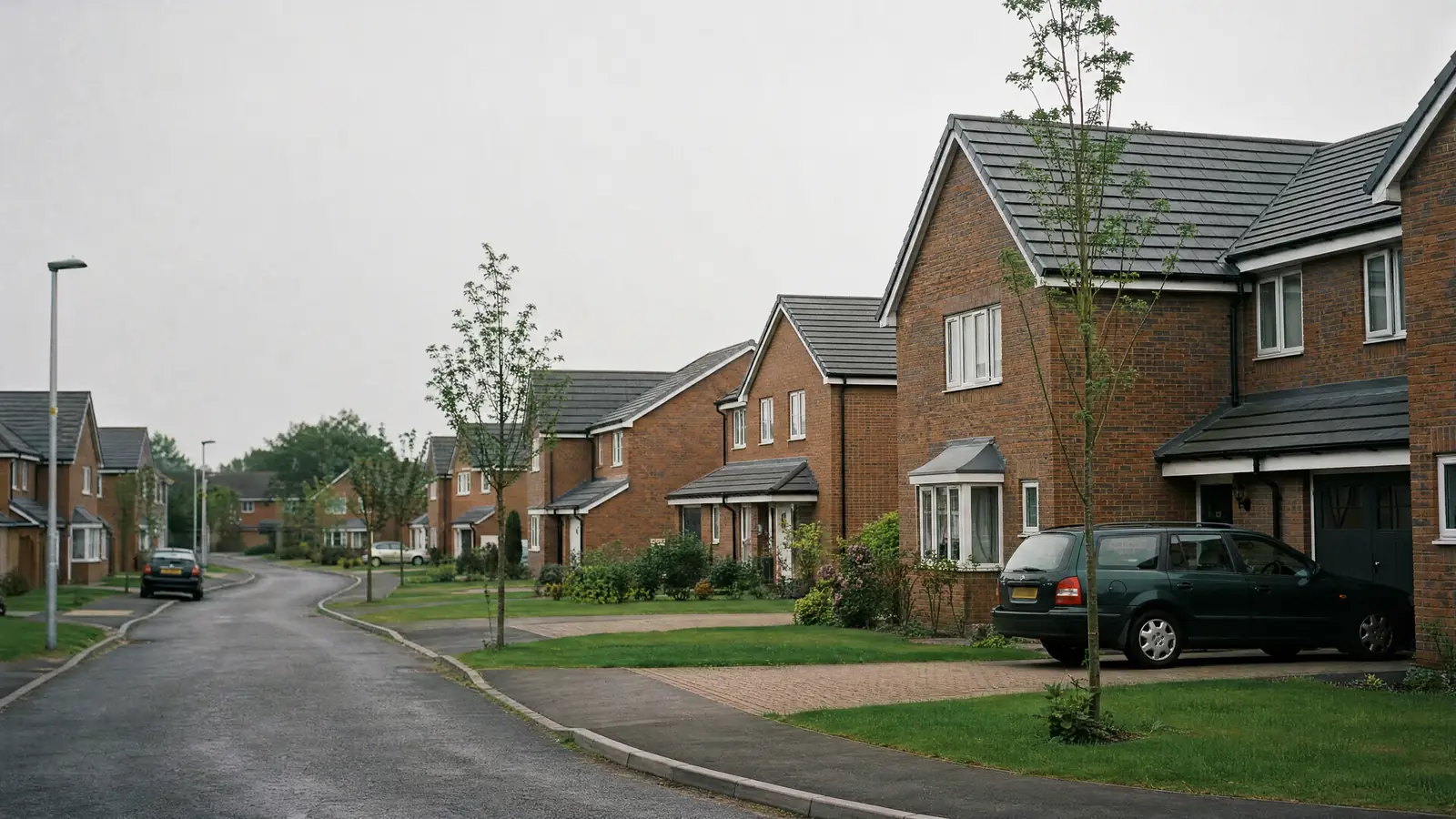
Hampton is still being built. Hempsted is under construction and The Hamptons is at planning stage, with the whole development planned to reach up to 8,500 homes. The oldest houses date from 1996 and 1997, and the newest do not exist yet.
Nothing here is close to the end of its designed service life, so the diagnostic question flips. In Bretton, where building began in 1970, the question is whether a worn out roof should be replaced. In Hampton it is almost always whether the roof was finished properly in the first place, and whether something has come loose since. A firm that only does re-roofs is not necessarily the right one to answer that.
What actually goes wrong on estate roofs here
Four recurring themes, none of them about tiles wearing out.
Dry verge systems
The plastic caps running up the gable edge in place of mortar. A genuine improvement, but they rely on clips and on the plastic staying sound in sunlight. One cap that works loose lets wind under the run, and on the fen edge there is plenty of wind.
Dry ridge systems
Mechanically fixed ridge tiles over a ventilated ridge roll. Failures are usually the roll tearing, fixings backing out, or a union at a hip left short. Because it is screwed rather than bedded, it shows as a lifted or rattling ridge tile rather than crumbling mortar.
Plot built detailing
Estate roofs are built at pace, in sequence, by different trades, and the junctions are where that shows: valleys, abutments where a lower roof meets a wall, porch and bay roofs, and the flashings around them. Look there first when a modern house leaks.
Loft ventilation
A modern roof is designed to breathe in a specific way. Insulation pushed hard into the eaves blocks the airflow the design assumed, and the condensation that follows gets reported as a leak. Diagnose damp in a young loft before anyone quotes to rebuild anything.
The warranty clock, and what happens when it runs out
Most new housing of this era was sold with a structural warranty of the NHBC type. These typically run for ten years and are not one consistent thing across that decade. Knowing which phase you are in tells you who to ring.
- Roughly the first two years. The builder liability period, when the developer is generally responsible for putting defects right, and a missing verge cap costs you nothing but persistence.
- Roughly years three to ten. Cover narrows considerably, usually to specified structural items rather than finish and workmanship. A loose ridge tile in year six is often nobody's problem but yours.
- After year ten. The warranty is gone and everything is yours, including things that were arguably never right.
- Years twenty to thirty. Where Hampton Hargate now sits, and the age at which the first non-warranty problems surface: plastics with two decades of sun, fixings with two decades of movement.
If you are still inside the first two years
Report it to the developer in writing, keep the correspondence, and photograph everything from the ground before anyone touches it. Paying an independent roofer to fix a defect that is the developer's responsibility can complicate a claim, unless water is actively coming in.
Where a leak has started, find out where it comes from before commissioning anything. Our roof leaks guide explains why the wet patch is rarely under the hole, which matters more on a modern roof where water travels along a membrane before it appears.
Brick fields, extensions and what a Hampton job costs
There was room for a development this size south of the city because the ground had already been worked. Hampton was built on former brick fields, where Oxford clay had been dug since Roman times, and by the twentieth century Peterborough had become one of the country's most important brick producing centres.
For a roof, the more useful fact is what people here actually spend money on. Full re-roofs are rare. The common jobs are small and specific, and the second category is flat roofing, because estate houses of this age are exactly the ones getting extensions.
- Replacing slipped or displaced tiles, roughly £150 to £350
- Re-fixing or replacing a ridge, roughly £450 to £1,200
- Replacing lead flashing to a chimney, roughly £350 to £850
- EPDM flat roof to a single garage, roughly £1,600 to £3,000
- GRP fibreglass flat roof to an extension, roughly £2,200 to £4,500
Researched guide ranges including VAT, not quotes. Flat roofing detail is on flat roof cost and flat roofing; small pitched work is on roof repair cost. When you want real figures, compare quotes and say how old the house is. For contrast, Millfield and New England covers Victorian terraces, where nothing on this page applies.
Frequently asked questions
Find out which phase you are in first. In roughly the first two years the developer is generally responsible for putting defects right, and paying someone else can weaken your position. After that, cover usually narrows to specified structural items. If water is coming in, make it safe now and deal with the paperwork afterwards.
Put it in writing with dates and photographs, and escalate through the developer's customer care process first, because warranty providers generally expect that. If it is genuinely out of warranty, treat it as an ordinary roofing job and get it priced.
Usually a small repair, and worth doing quickly, because a dry verge run works as a continuous system and one missing cap exposes the rest to wind. Where the plastic has gone brittle across the whole gable, replacing the run can make more sense than chasing individual caps.
Too new for a re-roof in almost every case, and exactly the right age for the first round of non-warranty problems. Plastics have had two decades of ultraviolet exposure and fixings two decades of thermal movement. An inspection is cheap. A neglected verge letting wind under the tiles is not.
Usually yes, because the concrete tile products used on housing of this period are mostly still manufactured. Colour is the awkward part: twenty five years of weathering means a new tile rarely matches exactly on day one, though it settles.
Not directly. Ground conditions are a foundations question, and anything genuinely structural belongs with a surveyor rather than a roofer. It appears here because the brick fields are why the development exists and why the housing is all of a similar age, which is the most useful thing to know about roofing in Hampton.
Get quotes from Peterborough roofers
Tell us your postcode and what needs doing. We pass it to vetted roofing firms covering that part of Peterborough, and they come back to you directly with quotes.
- Takes about a minute
- No cost to you, ever
- You choose who to speak to, and you can say no to all of them
Compare Peterborough roofers
Answer four questions. We pass your job to vetted roofers who cover your postcode, and they come back to you with quotes. No charge, no obligation.
We pass your details only to roofing firms that cover your postcode, so they can quote. We never sell your details on for other purposes. See our privacy notice.
Find out what your roof should cost
Compare quotes from vetted Peterborough roofers, or call us and we will point you at the right sort of firm for the job.